

General lifestyle and workplace-movement education only—not medical, psychological, or emergency advice. We do not sell medicines, supplements, or medical devices. Optional group sessions in Utrecht: any fee and terms are confirmed in writing before you book.
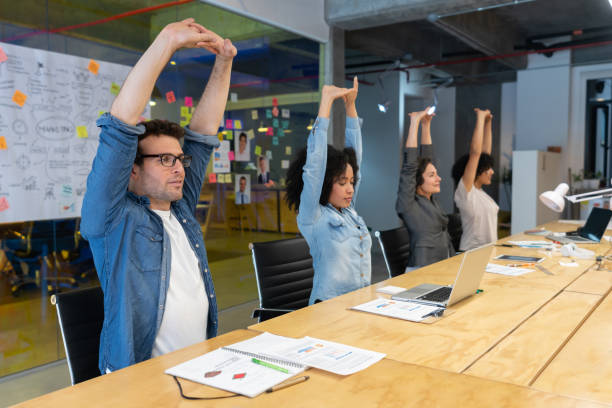
Guided desk stretch session in a modern office

Desk Stretches That Fit Between Meetings

Seated and standing movements you can repeat in two to five minutes—no mat, no change of clothes. Move gently and adjust range to what feels comfortable for you today.

Before You Start: Safety Basics

Desk stretches target muscles that shorten during typing and mouse work—the chest, hip flexors, wrists, and upper trapezius. The goal is gentle lengthening and circulation, not forcing maximum range. Breathe steadily: inhale during setup, exhale as you ease into the stretch. Hold most positions 15–30 seconds unless noted otherwise.

If you have recent injuries, joint replacements, or ongoing discomfort, ask a qualified professional whether these movements suit your situation. Stop immediately if you feel sharp pain, tingling, or dizziness. These instructions describe common office-friendly options; they are not personalised prescriptions and we do not claim they will resolve a specific condition for you.

Who we are · Contact · Free guides, no product sales.
  • check_circle Chair stable, wheels locked if possible
  • check_circle Remove loose jewellery that catches on cables
  • check_circle Keep movements slow—no bouncing
  • check_circle Both sides: repeat each stretch left and right
  • check_circle Hydrate before long stretch blocks
Seated shoulder and upper back stretch at office desk

Shoulder Reset Sequence

  1. Rolls: Sit tall. Roll shoulders backward 8 slow circles, then forward 8. Keep ribs soft—avoid arching your lower back.
  2. Doorway substitute: Clasp hands behind your back if space allows, or grip the chair seat. Open chest gently for 20 seconds.
  3. Overhead reach: Interlace fingers, palms up. Reach overhead; lean slightly right, then left. Hold each side 15 seconds.
  4. Eagle arms (modified): Wrap one arm under the other at elbow height, lift forearms if comfortable. Feel between shoulder blades. Switch arms.

Repeat mid-morning and mid-afternoon on heavy keyboard days. Pair with a 30-second walk to the printer for better overall circulation.

Lower Body: Hips and Legs at the Desk

Sitting shortens hip flexors and can make standing up feel stiff after long calls. These moves wake up the lower body without leaving your workstation area.

  • airline_seat_recline_normalSeated figure-four: Ankle on opposite knee, hinge forward until you feel outer hip stretch. 20 sec each side.
  • straightenHamstring reach: Extend one leg, heel on floor, toes up. Lean forward with flat back. 20 sec each leg.
  • directions_walkCalf raises: Stand, rise onto toes 12 times. Hold desk lightly for balance only—not to lean weight forward.

timer Sample 4-minute block

Minute 1: ankle circles (10 each direction). Minute 2: figure-four both sides. Minute 3: hamstring reach. Minute 4: stand, calf raises, shoulder rolls. Log stiffness 0–10 before and after for one week to see your personal pattern.

Add posture breaks

Wrist and Forearm Mobility

Repetitive clicking and typing load small forearm muscles. Micro-breaks reduce cumulative tension that sometimes contributes to wrist discomfort—though individual factors vary widely.

  1. Extend arm, palm up. Gently pull fingers back with opposite hand—15 sec.
  2. Flip palm down; pull fingers toward you—15 sec.
  3. Make fists, then spread fingers wide—10 reps.
  4. Rotate wrists slowly 10 circles each direction.

Consider a split keyboard or vertical mouse if discomfort persists after ergonomic adjustments—discuss options with your employer’s facilities or occupational health contact.

Wrist mobility exercise during a typing break

Health & Safety Guidelines

These guidelines support safe practice in typical Dutch office environments. They do not replace employer risk assessments or medical evaluation.

  • Environment: Ensure cables are tucked away before standing stretches. Use non-slip footwear on smooth office floors.
  • Intensity: Stretches should feel like mild tension, not pain. Reduce range on days when you feel unusually tired.
  • Medical context: Pregnancy, recent surgery, or cardiovascular conditions may require modified movement—seek professional guidance.
  • Reporting: If workplace equipment causes discomfort, notify your manager or ARBO (occupational health) adviser per company policy.
  • Emergencies: This site is not an emergency service. Call 112 in the Netherlands for urgent medical situations.

Questions about sessions